Les Tastevins du Lac is dedicated to camaraderie in pursuit of joie de vino! This blog serves as an informal forum on wine, food and travel.... Cheers! Steve Adams


Pages

Saturday, March 7, 2026

2018 Melville Pinot Noir Sandy's Block


Semi-awkward young phase. But you can taste the whole cluster pedigree.... slightly distracting jauntiness on the palate when first poured.... it will likely settle down (or just wait five years) ... the savoriness and sappy-ness are reminiscent of a Vosne-Romanee Les Beaux Monts .. I don't drink a lot of Santa Barbara Pinot Noir anymore, so this is quite fascinating...

Although the soils in Les Beaux Monts are shallow, stony, red-brown clay-limestone, often featuring iron-rich clay and chert nodules (chailles) in contrast to the sandy loam soils of Sandy’s Block.

this gets exponentially more elegant after a couple of hours of air in situ .. the savory notes get yummy...

Producer notes:
"... The Sandy’s block is named in honor of Ron Melville’s sister and was deliberately planted on the extremely sandy northwest section of our east vineyard. This block also contains clonal material representative of our new era of plantings and includes selections from Calera (Clone 90) and clones 37, 459 and 114. These four selections, when planted on sand, produce wildly intense and pretty aromatics with a very ethereal and harmonic palate impression. 50% of the fruit was gently de-stemmed, with 50% remaining as whole clusters, and was fermented in small 1.5 ton open top fermenters. Total skin and stem contact averaged 30 days (7-day cold soak, 2+ weeks of fermentation and 1+ week extended maceration). After spending 8 hours in the basket press, the wine was transferred directly to neutral barrels where it remained sur lie without disturbance and with no sulfur ..."

Saturday, February 28, 2026

2016 Čotar Metodo Classico Crna

 Producer notes from @"Eric Guido"

"....Čotar is located just over the Italian border in Slovenia in an area known as Kras, which is actually an extension of Friuli’s Carso district, a region that is well known for its production of Refosco. However, here in Kras, Refosco takes on the name Terrano, a variety that father-son team Branko and Vajsa Čotar excel with...."

100% Terrano (Refosco)

Based on the label, it appears the disgorgement may have occurred in 2022.

Only a slight effervescence on the palate. Bone dry. Excellent minerality. Shockingly purple yet fairly deft in the mouth. A food wine with the stoniness.  Paired with grilled shrimp and filet mignon, creamed spinach and sautéed shrooms...

I'm looking forward to trying the 2013 Čotar Crna still red wine. 
This is really my first experience, I think, with Slovenian wine...

Interesting!

---------

Additional note courtesy Michele Gargani:

Terrano and Refosco are not synonymous or interchangeable. Refosco refers to a family of grapes, often called "refoschi", so it's important to specify which one you're discussing. These aren't just different clones or biotypes; they're distinct varieties altogether, much like Cabernet Franc is separate from Cabernet Sauvignon, and the wines they produce can be quite different. When people mention Refosco, they generally mean Refosco dal Peduncolo Rosso, which is more prevalent in the Colli Orientali. Within the broader Refosco world, there are also minor varieties like Refosco di Faedis and Refoscone, but remember, these are entirely different grapes. In fact, there's no Terrano in the Colli Orientali, and very little Refosco dal Peduncolo Rosso in the Carso (Kras)


Friday, February 20, 2026

2009 Burgundy and 2009 Barolo

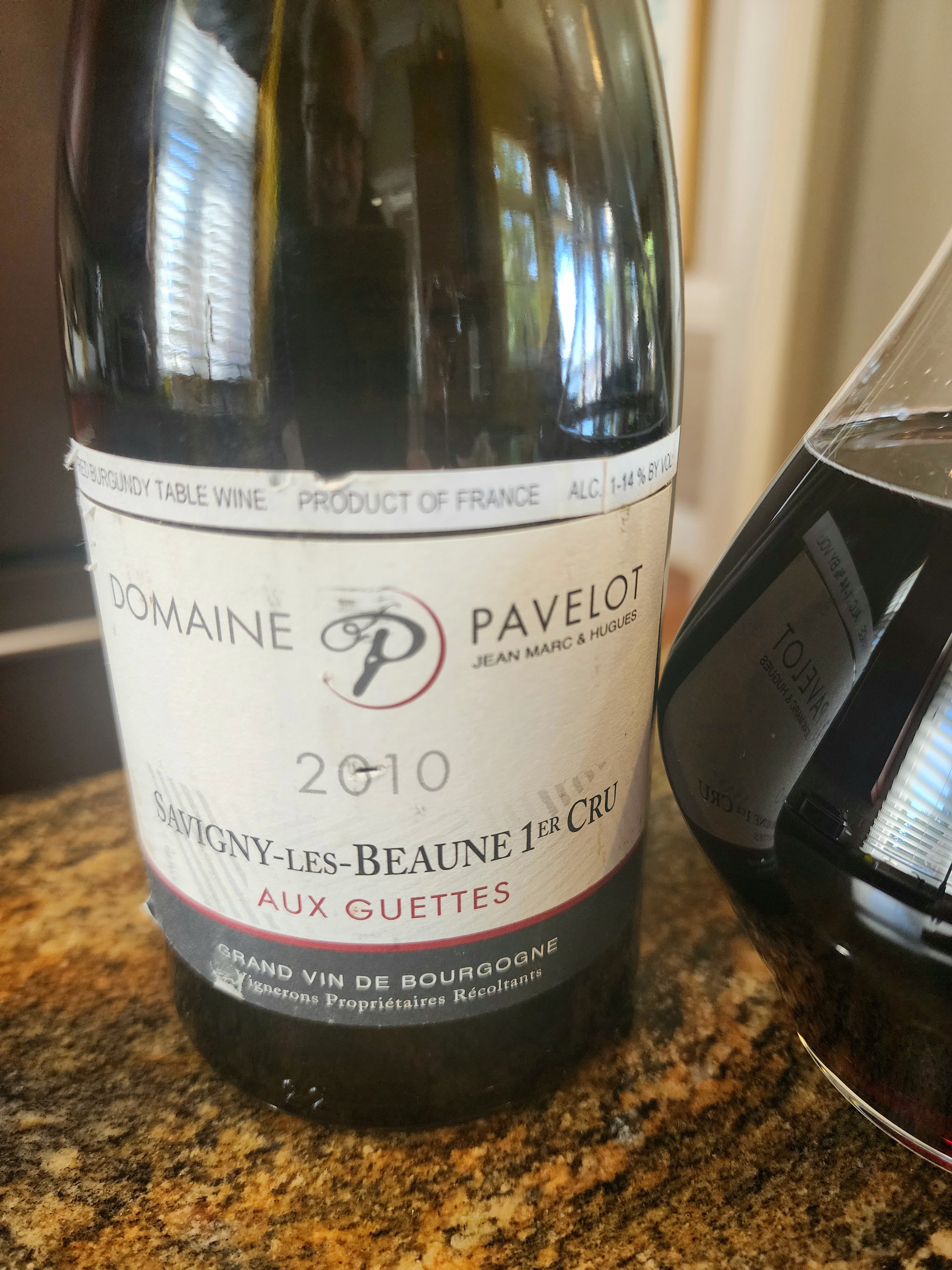
 2009 Jadot Beaune Clos des Ursules

This bottle is in a lovely spot for enjoying now. Attractive perfume... delicious balance of classically styled fruit and acidity that is just right. Will continue to develop favorably. This was decanted for aeration for about 90 minutes, then poured back into bottle. No sediment to speak of. 

2009 Brovia Barolo
Importer's notes:
"...Brovia’s formidable Barolo "Brovia" epitomizes their classically built yet elegant house style and expresses the full breadth of their enviable holdings. While its composition varies slightly each year depending on yields, it always comprises the following sources: (1) From their holdings in Castiglione Falletto, Brovia produces but one single cask of each cru-designated wine per vintage, directing any extra volume into the Barolo "Brovia." Accounting for 20-30% of the wine's final blend, this spillover comes from vines exceeding 50 years of age in the crus of Rocche di Castiglione, Villero, and Garblet Sue. (2) 70-80% of the Barolo "Brovia" comes from holdings in Serralunga d’Alba, primarily in the cru of Brea with smaller amounts (beginning in 2020) in Gianetto, an east-facing cru which is a natural extension of Brea and yields a wine of similar character. These vines are 20 to 30 years of age on average, the oldest parcels of Brea being used for the single-cru bottling. The Barolo "Brovia" undergoes spontaneous fermentation in a variety of vessels—cement, open-top wood, and stainless steel—and is raised 24 to 30 months in oak botti between 30 and 100 hectoliters in capacity. Afterward, the wine is assembled in a combination of steel and wood for an additional year, being bottled no sooner than 40 months after harvest. This aging process, which is longer than that of the crus (aged solely in 30- to 40-hectoliter casks and bottled after 30 months), allows for a wine slightly more open-knit upon release by design..."
This bottle showed beautifully. It was slow-o'd for several hours and opened wonderfully over dinner being poured from bottle. 

A word about drinking these wines side by side. My early favorite was the Burgundy. Over the course of several hours, I gravitated more to the Barolo, with the main reason being the lengthy,  very tasty and complex finish. In the end, I even preferred the Barolo with my main course of grilled branzino over the Burgundy... go figure.  I'm not taking anything away from the Burgundy.... it was indeed one of the most elegant 2009 vintage Cote de Beaune wines I've had recently.  I suspect that additional cellar time for the Burgundy will be favorable for tertiary development and increasing complexity on the finish.

These wines were enjoyed at a pre-show dinner for Railroad Earth, which is one of those bands that's best appreciated at a live performance. A joyous concert. 

Sunday, February 15, 2026

2005 Martinelli Pinot Noir Blue Slide Ridge Vineyard

 This turned out to be quite delicious after several hours of air in decanter first to deal with the heavy amount of sediment (typical of this bottling in this time period) and then back into bottle to transport to restaurant. I admit that the abv is scary for a pinot noir but whatever Helen Turley was doing back then at Martinelli, it worked, well especially with regard to age-ability of the wine. I tend to enjoy these wines also from a nostalgic perspective. 

Still, of the 2001 - 2005 vintages of Martinelli BSR, the 2005 is the standout for sheer beauty if not balance. 

Thursday, February 12, 2026

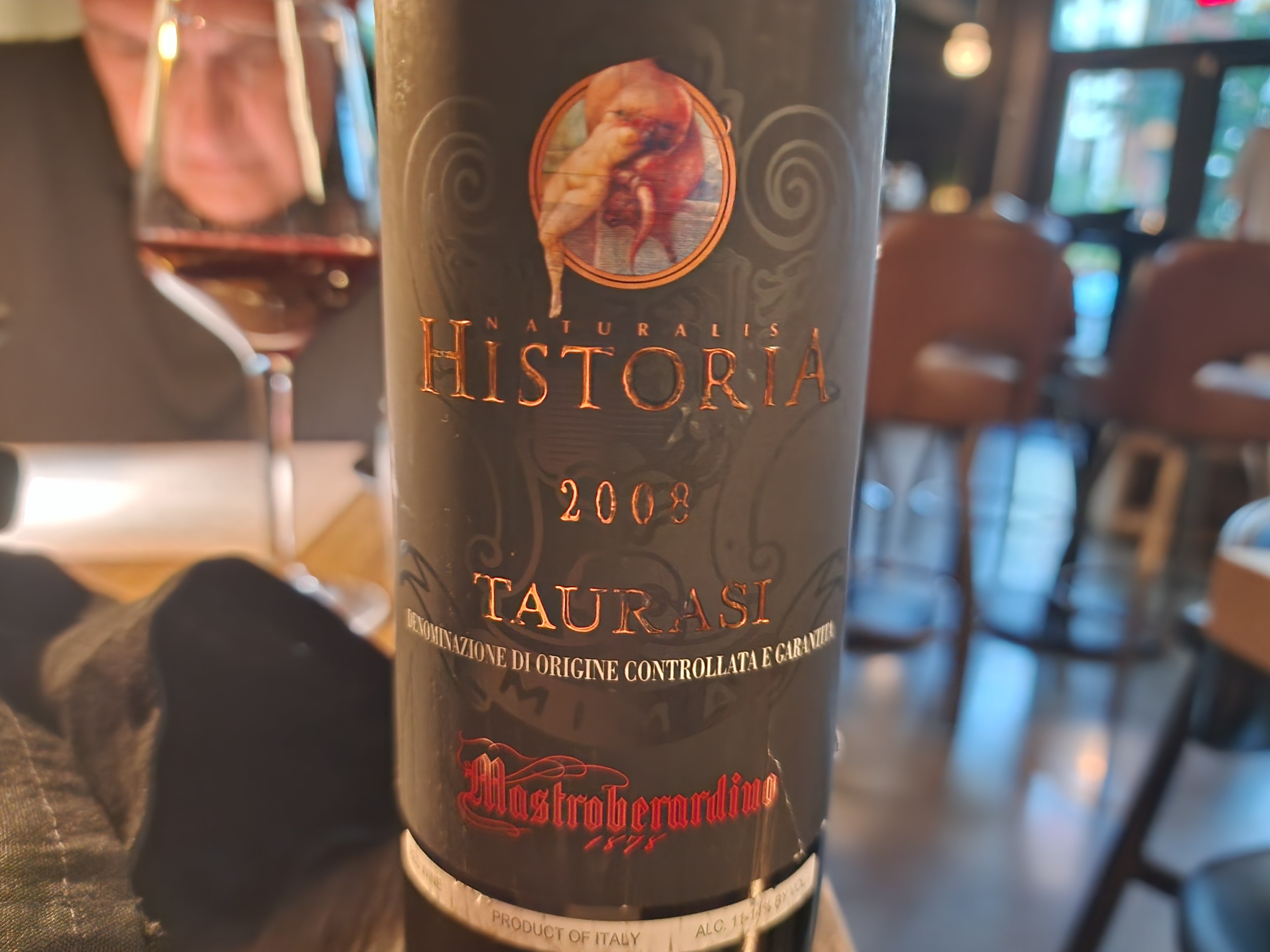
2007 Mastroberardino Taurasi Riserva Radici

 In a beautiful stage of fulfillment of the pedigree... the richness of the 2007 vintage fruit has aged enough now to permit the wine to show more elegantly with that signature "Taurasi garrique" that is so savory in the 2006 Radici Riserva bottling, so you now get some of that in the 2007.

This is so nicely balanced and will continue to age very gracefully,  IMO. Superb depth and complexity on a long filigreed finish. 

Paired with smoked local pork shoulder, pork ribs, collards and roasted Brussels sprouts, hushpuppies ...

The less than welcome news is that the 2006 Radici Riserva and 2007 Radici Riserva have both shot up in price by 100% and 120% , respectively., on the secondary market. So make what you will of that. 

Tuesday, February 10, 2026

2019 Falkenstein Krettnacher Eucharuisberg Riesling Kabinett Alte Reben AP8 "Gisela"

 This wine knows what it is compared to the  2019 Falkenstein Niedermenniger Herrenberg Riesling Spätlese feinherb we had recently (which was way too young and temperamental).

It's also a very rich Kabinett-level wine, if you like that... superior aging potential... balanced fruit and acidity...

Alte Reben cuvee is dependable year in and year out... I suppose "Gisela" is a specific barrel (?). Albeit, this appears to be a particularly rich vintage, based on my admittedly limited, but very very enjoyable experience with Erich and Johannes Weber's wines courtesy of introduction through @"Marius Fries"...

The fruit here exhibits a very noble tropical finsh after being open a few hours that I think is primed for further cellaring...

17th February follow up notes..
Enjoying the rest of this bottle on Feb 17th, a full siz days under vacuum seal chilled in a wine friIdge... wow! remarkable, clearly beautifully managed in the vineyard ... ... piquant, FULL fruit... so tasty with impressive depth and finish... quite more lush than earlier vintages.... I love the purity of fruit but miss the elegance...


Saturday, February 7, 2026

2019 Falkenstein Niedermenniger Herrenberg Riesling Spätlese feinherb

 Much more drinkable than a year ago. Still young. It's like the richer and drier components of this wine are fighting each other and the richer side is strong enough to win... this is really not an elegant feinherb like previous vintages I've had (2017 and 2015)... definitely a hold just to enjoy the aging of the fruit, which is really on the lush side...side...a bit of an ill-defined tango with tangerine beating up on peach...

Frankly I like the elegance of previous years and I enjoyed them young because they were so drinkable...